


GODDESS ARCHIVE (partial)


the following imagery was used in the music video for RAGE
*this is just scratching the surface and more will be added in time*
Stèle, Tophet de Carthage, Tunisie,
Photo by Michel-georges bernard,
Creative Commons Attribution-Share Alike 3.0
Unported, 2.5 Generic, 2.0 Generic and 1.0 Generic
Stele with fish and tanit sign, Museum of Fine Arts of Lyon,
Photograph by Rama,
Creative Commons Attribution-Share Alike 2.0 France license. Wikimedia
Stele with the Tanit sign. Limestone. 3rd century BC.
Louvre museum (Paris, France). Photograph by Tangopaso,
Public Domain, Wikimedia
Goddess Figure from Crete, holding confronted snakes, dated 1600 BC. Heraklion Archaeological Museum, Photograph by C Messier, Creative Commons Attribution-Share Alike 4.0 International, Wikimedia
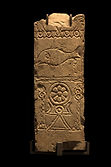

Stela, Museum no. 118787,
© The Trustees of the British Museum.
Shared under a Creative Commons Attribution-NonCommercial-ShareAlike 4.0 International

Stèle punique à l'effigie de la déesse Tanit, Louvre Museum,
Photograph by Christelle Molinié,
Creative Commons Attribution-Share Alike file) 4.0 International, Wikimedia
Tanit symbol in Solunto, Photograph by Dedda71,
Creative Commons Attribution 3.0 Unported, Wikimedia

Punic stelae, The Carthage National Museum,
Photograph by Touzrimounir
Creative Commons Attribution-Share Alike file 4.0 International, Wikimedia


Venus of Dolni Vestonice, c. 29,000-25,000 BCE. Source- Petr Novák, Wikipedia
Moravské zemské muzeum (Moravian Museum), Brno, Czech Republic
Creative Commons Attribution-Share Alike 2.5 Generic, Wikimedia
Marble Female Figure, Cycladic, 4500-4000 BC,
The Metropolitan Museum of Art, Open Access Policy, Public Domain

The Venus of Willendorf,
Austria, c. 24,000-22,000 BCE.
Naturhistorisches Museum Wien, Austria
Photograph by NHMWien, Creative Commons Attribution-Share Alike 4.0 International, Wikimedia

Vénus de Laussel, ou Vénus à la corne : bas-relief retrouvé dans l'abri
Laussel (Dordogne), et arraché de la paroi. Vers 29000-28000 ans AP. Musée
d'Aquitaine, Bordeaux. Photograph by Zunkir, Wikimedia


Terracotta figurine, Cyprus
© The Trustees of the British Museum. Shared under a Creative Commons Attribution-NonCommercial-ShareAlike 4.0 International (CC BY-NC-SA 4.0) licence.

Terracotta figurine of a goddess with up-raised arms,
© The Trustees of the British Museum. Shared under a Creative Commons
Attribution-NonCommercial-ShareAlike 4.0 International (CC BY-NC-SA 4.0) licence.
Openwork plaque of Isis, Amulet depicting the goddess Isis, Wood,
Museo Egizio, Creative Commons CC0 1.0 Universal Public Domain Dedication, Wikimedia

Sheela-na-Gig sculpture found in 1842 in Lavey, County Cavan. It is on display
in the Cavan County Museum, Photograph by Picasa

Sheela na gig from Ireland in the British Museum, Photograph by Jononmac46,
Creative Commons Attribution-Share Alike 4.0 International

Christ’s Side Wound, Psalter of Bonne de Luxembourg, ca. 1349,
Jean Le Noir, Wikimedia US, Public Domain

Painted clay artifact from Iraq (c. 1750 BCE) depicting Ishtar. Representation of Inanna/Ishtar at the 'Venerated and Feared' exhibition at CaixaForum in Zaragoza (Spain), December 2024 to March 2025. Lent for the exhibition by The Trustees of the British Museum. Photograph by Piwiki314,
Creative Commons CC0 1.0 Universal Public Domain Dedication.

Fragment of a headless statuette of Ishtar-Inanna. Susa. 2nd millennium BCE.
Light beige terracotta. H. 8.5 cm. Inv. 5416. Museum of Mediterranean Archaeology, Marseille.
Photograph by Ismoon, Wikimedia, Creative Commons Attribution-Share Alike 4.0
International, 3.0 Unported, 2.5 Generic, 2.0 Generic and 1.0 Generic

The goddess Ishtar, winged and wearing a version of the horned cap of divinity. Detail of the Mesopotamian terracotta "Ishtar vase", early 2nd millennium BC. Louvre Museum
© Marie-Lan Nguyen / Wikimedia Commons / CC-BY 2.5

Furniture inlay with the engraving of the goddess Ishtar. The goddess reveals
her body and holds on her head a star cradled by a crescent moon. From the Ishtar
temple of Mari. 2500-2400 BC. Louvre museum (Paris, France). Photograph by Tangopasso, Wikimedia


Stele mentioning offerings, in Cirta Museum, Constantine in Algeria, Photo by Reda Kerbush,
Creative Commons Attribution-Share Alike 4.0 International, Wikimedia


Punic stele decorated with an open hand and the sign of Tanit, 3rd - 1st centuries BCE,
Courtesy of Musée des beaux-arts de Lyon, Photograph by Rama, Creative Commons Attribution-Share Alike 2.0 France, Wikimedia
Babylonian Astarte figures, nude, Nordic family book,
Public Domain, Wikimedia


Fired clay plaque showing the goddess Ishtar (Inanna). She wears a horned headdress and a
necklace. The overall depiction is similar to that of the Old-Babylonian's Queen of the Night (Burney) relief. 19th to 17th century BC. From Southern Mesopotamia, Iraq. The Pergamon Museum, Berlin, Germany. Photograph by Osama Shukir Muhammed Amin FRCP(Glasg), Creative Commons Attribution-Share Alike 4.0 International, Wikimedia
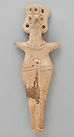
Ishtar, Mesopotamia, Babylonian, circa 2000 B.C., Public Domain, Photograph by Staff Photographer, LACMA - The Los Angeles County Museum of Art, Wikimedia
Ishtar in Kudurru (stele) of King Melishipak I (1186–1172 BC),
Photograph by Marie-Lan Nguyen, Public Domain, Wikimedia

Female statuette, Suse.
Photograph by Rama, Wikimedia Commons, Cc-by-sa-2.0-fr

The 8-pointed star, the symbol of the goddess Ishtar. Detail, stele of Bel-harran-beli-
usur, from Tell Abta, west of Mosul, Iraq. 8th century BCE. Ancient Orient Museum, Istanbul,
Turkey. Photograph by Osama Shukir Muhammed Amin FRCP(Glasg),
Creative Commons Attribution-Share Alike 4.0 International, Wikimedia

Funerary chamber at the Ras ed-Drek Punic necropolis, Photograph by TAKOUTI,
Creative Commons Attribution-Share Alike 4.0 International, Wikimedia

Tanit – Female fertility deity – Bardo National Museum – Tunisia
Photograph taken by Juan Antonio Ruiz Rivas in July 2005 and released into the public domain.

Pendants in the shape of the "sign of Tanit" found at Ashkelon in modern Israel.
By Camocon, Creative Commons CC0 1.0 Universal Public Domain Dedication, Wikimedia

Venus of Lespugue, mammoth ivory, found in the Grotte des Rideaux (
Lespugue, Haute-Garonne, France ). Dated from the Gravettian, ( Upper Paleolithic, 23
000 years ). Currently in the Musée de l'Homme, in Paris.

KU Leuven. Venus van Lespugue Series
EuroPhot. Archaeology. Prehistoric. Sculptures. Campus Arenberg Hosted Collections, Photography, Digital Heritage Online, Visual Materials, Public Domain, Wikimedia


Seated Goddess figurine, Çatalhöyük, first half of 6th millenium b.c., loren Terra
Cotta, Photograph by Sefer azeri, Creative Commons Attribution-Share Alike 4.0 International
Mother Goddess with child, small terracotta, height 8.3 cm. Hacilar, arouond
5500BC. Museum of Anatolian Civilizations, Ankara. Photograph by Zde,
Creative Commons Attribution-Share Alike 4.0 International, Wikimedia

Cussac Cave Engraving, Photo: Don Hitchcock, donsmaps.com,
Creative Commons Attribution-Share Alike 4.0 International, Wikimedia

Artemis of Ephesus, 2nd Century AD.
Creative Commons Attribution-Share Alike 2.0 Generic, Photo by Jamie Heath, Wikimedia

Statue of Artemis of Ephesus (Lady Artemis) displayed at the Ephesus Museum,
Selçuk, Turkey. The cult statue features the characteristic multiple breast-like protuberances,
animal friezes on the skirt, and flanking deer. Marble. Creative Commons Attribution-Share Alike 4.0 International, Wikimedia

Artemis Ephesus Museum, Turkey, Photograph by Blcksprt,
Creative Commons Attribution-Share Alike 4.0 International, Wikimedia

Statue of the type of the Artemis of Ephesus. The head, hands and feet
are a modern restoration by Giuseppe Valadier.
2nd Century AD. Farnese Collection. Naples National Archaeological Museum.
Creative Commons Attribution 2.5 Generic, Photo by Marie-Lan Nguyen (2011), Wikimedia

Circle of Francesco Vanni, The Virgin,
Queen of Heaven, early 17th century, National Gallery of Art,
Gift of John O'Brien, Open Access Policy,
Creative Commons CC0 1.0 Universal Public Domain Dedication

Caryatid, Amedeo Modigliani, Photograph by John Dillenbeck,
Creative Commons CC0 1.0 Universal Public Domain Dedication


KU Leuven. Drie Venusbeeldjes Series. EuroPhot. Archaeology. Prehistoric. Sculptures. Campus Arenberg Hosted Collections, Photography, Digital Heritage Online, Public Domain, Wikimedia


Caryatids of Erechtheum, Acropolis of Athens, Photo by Jakub Hałun,
Creative Commons Attribution 4.0 International, Wikimedia
Archaic Mother Goddess - Terracotta - Circa up to 4th Century BCE -
Prehistory and Terracotta Gallery -Government Museum - Mathura.
Photo by Biswarup Ganguly, Creative Commons Attribution 3.0 Unported, Wikimedia
Archaic Mother Goddess - Terracotta - Circa up to 4th Century BCE - Prehistory and Terracotta Gallery -
Government Museum - Mathura, Photo by Biswarup Ganguly, Creative Commons Attribution 3.0 Unported, Wikimedia

Amlash-style mother goddess, 5 of 5, perhaps Amlash, Northern Iran, Iron Age, c. 1200-900 BC, earthenware - Royal Ontario Museum, Photo by Daderot, Creative Commons CC0 1.0 Universal Public Domain Dedication, Wikimedia
Amlash-style mother goddess, 2 of 5, perhaps Amlash, Northern Iran, Iron Age, c. 1200-900 BC, earthenware - Royal Ontario Museum, Photo by Daderot, Creative Commons CC0 1.0 Universal Public Domain Dedication, Wikimedia

Amlash-style mother goddess, 3 of 5, perhaps Amlash, Northern Iran, Iron Age, c. 1200-900 BC, earthenware - Royal Ontario Museum, Photo by Daderot, Creative Commons CC0 1.0 Universal Public Domain Dedication, Wikimedia
Amlash-style mother goddess, 4 of 5, perhaps Amlash, Northern Iran, Iron Age, c. 1200-900 BC, earthenware - Royal Ontario Museum, Photo by Daderot, Creative Commons CC0 1.0 Universal Public Domain Dedication, Wikimedia


Venus of Laussel, or Venus with the Horn: bas-relief found in the Laussel rock shelter (Dordogne) and detached from the rock face. Circa 29,000–28,000 years BP. Musée d'Aquitaine, Bordeaux. Photo by Zunkir. Creative Commons Attribution-Share Alike 4.0 International, Wikimedia
Painted vessel figurine of a nude woman from Yarim Tepe II settlement, Iraq. Halaf culture, 5th millennium BCE. Iraq Museum. IM79740. Osama Shukir Muhammed Amin FRCP(Glasg). Creative Commons Attribution-Share Alike 4.0 International, Wikimedia.
Mother Goddess - Terracotta - Mauryan Period - Showcase 16-10 -Prehistory and Terracotta Gallery - Government Museum - Mathura Photo by Biswarup Ganguly, Creative Commons Attribution 3.0 Unported, Wikimedia
Two female clay figurines. The one on the right feeds a child. Probably made for ritual purposes. Ur, Ubaid Period (c. 5200-4200 BC). ME 122872 and 122873. Photo by Zunkir, Creative Commons Attribution-Share Alike 4.0 International, Wikimedia.


Votive sculpture of Demeter or Kore from a sanctuary in the Valle Ariccia, Roman 4th-3rd century BCE, Photo by Mary Harrsch, Creative Commons Attribution-Share Alike 4.0 International, Wikimedia.
Huastec Mother Goddess, Ancient Mexico. 900-1450 CE, National Museum of Scotland, Edinburgh, Photo by Alf van Beem, Creative Commons CC0 1.0 Universal Public, Wikimedia

A mother goddess statuette from Canhasan, which is an archaeological site in Turkey. This figurine, along with other mother goddess figurines found in Canhasan, is thought to be an evidence of a continual matriarchal society in central Anatolia during theChalcolithic age. Photo by Noumenon, Creative Commons Attribution-Share Alike 3.0 Unported, Wikimedia.

Red jasper amulet of tyet, Egyptian, 664-334 BCE, The Metropolitan Museum of Art, Open Access Policy, Public Domain.

Amulet of Tyet (Isis Knot), Egyptian, Late Period, Dynasty 26 664-525 BCE. The Metropolitan Museum of Art, Open Access Policy, Public Domain.


Artemis B, bronze statue of the 4th century BC. 155 cm tall. Piraeus Archaeological Museum Greece, Photo by Deiadameian, Creative Commons Attribution-Share Alike 4.0 International, Wikimedia.
Venus of Hohle Fels (Aurignacian, 35.000-40.000 years BP), Photo by Ramessos, Creative Commons Attribution-Share Alike 3.0 Unported, Wikimedia.

Gospel of Mary, discovered in 1896. P. Oxyrhynchus L 3525,
Papyrology Room, Ashmolean Museum, Oxford. 120-180 AD,
Public Domain, Wikimedia

Sednaya Mary, detail, Mosaic depiction of Mary ordering Justinian not to kill her but to build a church on the rock in the background, after having first appeared to him as a gazelle (Convent of Our Lady, Greek Orthodox Church, Sednaya, Syria), Public Domain, Wikimedia
The Mocking of Ceres, print, Wenceslaus Hollar, after Hendrick Goudt,
after Adam Elsheimer (MET, 17.50.15-335), Metropolitan Museum of Art,
Open Access Policy, Creative Commons CC0 1.0 Universal Public Domain Dedication.


Anthony van Dyck: Susanna and the Elders,
between circa 1622 and circa 1623
Photograph by Pinakothek, Electoral Gallery Dusseldorf, Wikimedia
Rembrandt: Susanna and the Elders , Rijksmuseum,
Between 1650 and 1652, Public Domain, Wikimedia
Artemisia Gentileschi: Susanna and the Elders, ca. 1630,
The National Inventory of Continental European Painting, Public Domain, Wikimedia


Attributed to Sebald Beham, Susanna and the Elders, Creative Commons 0, pen and ink and wash heightened with white on blue prepared paper, overall: 18.6 x 18.5 cm (7 5/16 x 75/16 in.), Gift of Ian Woodner, 1986.79.1, Wikimedia
The creation of Eve, Michelang. Buonarota P. ; Ant. Capellan sc Abstract/medium: 1 print : engraving ; sheet 231 x 284 mm., 1772, Library of Congress, Public Domain, Wikimedia

Poems; with introd. by Richard Garnett and illus. by Byam Shaw (1904), No Known Copyright, Wikimedia

Mrs. Paul May, wife of miner, in the kitchen of her four room house. She has no running water in the
house. Jewell Ridge Coal Company, Jewell Ridge Mine, Jewell Ridge, Tazewell County, Virginia. 8 August 1946. National Archives at College Park. Photograph by Russell Lee, Public Domain, Wikimedia
A Chinese lady's feet contrasted with a boy's shoes and a cup, Changde,
Hunan, China, ca.1900-1919, Sanders St. Louis Co, Public Domain, Wikimedia


Susanna and the Elders, Peter Paul Rubens, between 1597 and 1640,
The Metropolitan Museum of Art, Open Access Policy, Marquand Collection, Gift of Henry G. Marquand, 1890, Creative Commons CC0 1.0 Universal Public Domain Dedication.


Sculpture from the hearth of house No. 51, Lepenski Vir Ic. It shows a vulva in a specific
physiological state, just before giving birth, with all its anatomical details. Photo: Srejovic, D., 1972: Europe's first monumental sculpture: new discoveries at Lepenski Vir (New aspects of antiquity) , Stein and Day; 1st US edition edition (1972). Source: Don Hitchcock, donsmaps.com

Big Sandy Housing Camp. Mines at Big Sandy closed and housing now occupied by Exeter Miners. Mrs.
Beulah Wady, wife of miner, with her youngest child in bedroom of their five room house. All electrical wiring is old and unsafe. Kingston Pocahontas Coal Company, Exeter Mine, Welch, McDowell County, West Virginia. 10 August 1946. National Archives at College Park. Photograph by Russell Lee, Public Domain, Wikimedia

Mrs. Furman Currington, wife of miner, hangs up laundry in kitchen of her 6 room house which rents
for $15.00 per month and houses 12 persons. Black Mountain 30-31 Mines, Kenvir, Harlan County,
Kentucky. 6 September 1946. National Archives at College Park. Photograph by Russell Lee, Public Domain, Wikimedia


Mrs. Walter Rose, wife of miner, and her baby. She lives in three room, extremely dirty house. The baby probably has rickets and has never had any other food than powdered milk although he is ten months old. The company doctor has not given Mrs. Rose any instruction as to feeding and care of child. Kingston Pocahontas Coal Company, Exeter Mine, Big Sandy Housing Camp, Welch, McDowell County, West Virginia. 10 August 1946. National Archives at College Park,Photograph by Russell Lee, Public Domain, Wikimedia
Mrs. Hilbert Bargo, wife of miner, in the kitchen of their three room house which they rent for $6 monthly. Big Jim Coal Company, Big Jim Mine, Blanche, Bell County, Kentucky. 4 September 1946. National Archives at College Park, Photograph by Russell Lee, Public Domain, Wikimedia
Mrs. Phillip Asbury, wife of miner, at the one closet in her four bedroom house. Panther Red Ash Coal Corporation, Douglas Mine, Panther, McDowell County, West Virginia. 26 August 1946. National Archives at College Park. Photograph by Russell Lee, Public Domain, Wikimedia


Burning witches, with others held in Stocks
Date 14th century, Public Domain

Mrs. Lincoln Hagg, wife of miner, in the bedroom of her house. This house is estimated to be at
least forty years old. Several years ago the company "remodeled" these old houses and at that time
put on new roofs, jacked up and leveled floors, put cinder block foundation posts under some,
sheetrocked the interiors, put in new windows and painted the exteriors. Panther Red Ash Coal
Corporation, Douglas Mine, Panther, McDowell County, West Virginia. 26 August 1946. National Archives at College Park, Photograph by Russell Lee, Public Domain, Wikimedia
Burning at the stake. An illustration from an mid 19th century book,
Creative Commons Attribution 2.0 Generic, Wikimedia
A manual of gynæcology and pelvic surgery, for students and practitioners (1916), Public Domain, Wikimedia

Archival material is used under the terms of its respective sources. Anyone is welcome to use them under those same terms.
The Wikimedia Foundation, where most examples were found, holds that faithful reproductions of two-dimensional public domain works of art are themselves public domain. Some material has been reformatted — opacity, angle, mirroring — for allegorical purpose.